Banana, Coffee, Taro
The Planetary Computing vector of GeoAI operates across the globe, and it impacts different regions and peoples in different ways. This text examines some of the issues that arise when GeoAI operates in the majority world, specifically in the Indonesian Archipelago and the island of Bali.
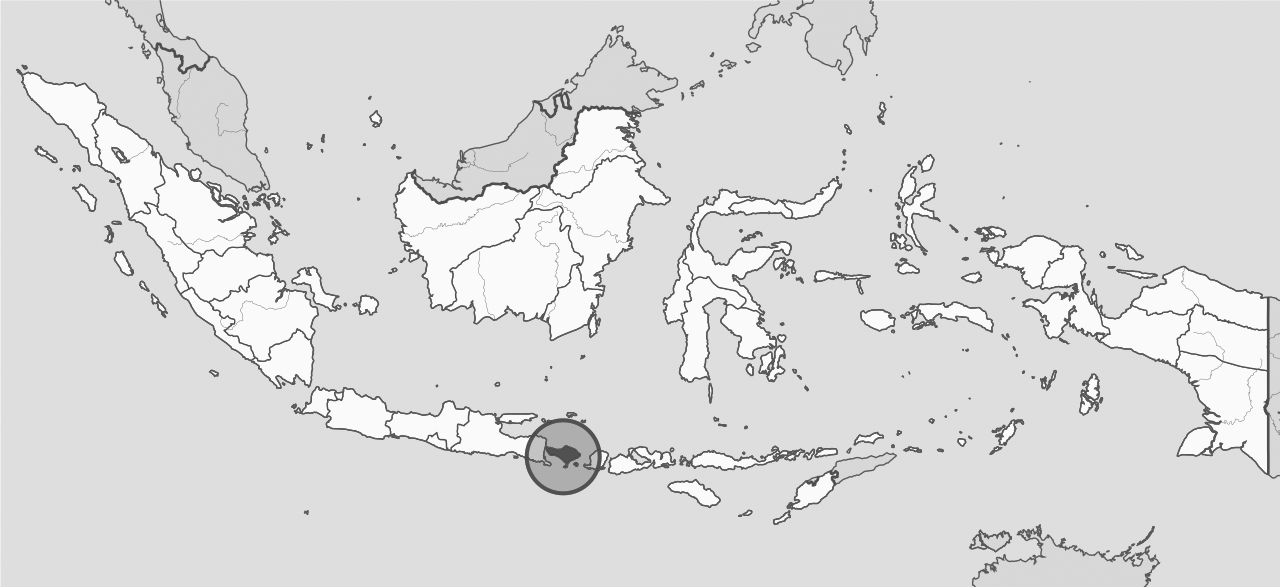
The Indonesian Archipelago and the island of Bali. Source: Wikimedia
Bali is a small island. On a map of Southeast Asia, you can find Bali south of the Philippines, north of Australia, east of Java, and west of Lombok. Bali is part of the vast Indonesian archipelago, covering approximately 2 million km² and encompassing over 17,000 individual islands, of which only about a third are inhabited. Indonesia is one of the world’s most populous countries, yet it includes vast areas that are sparsely inhabited, including wilderness, and boasts a high level of biodiversity. Indonesia's history is long and complex, with centuries of exposure to Hinduism and Buddhism, as well as decades of colonial rule under the Dutch, who recognized the country's independence only several years after its formal declaration in 1945.
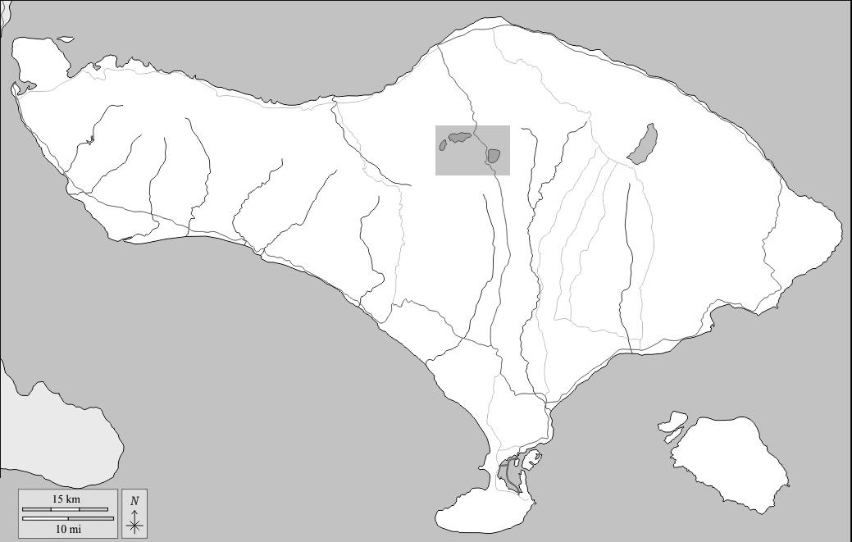
The island of Bali and the project study site in Central Bali.
Indonesia is the third-largest democracy in the world and the largest Muslim-majority democracy. Unlike other parts of Indonesia where Islam is the dominant religion, Bali maintains a Hindu-majority population. Bali’s traditional arts, natural resources, and tropical climate establish it as a premier travel destination for visitors from Indonesia and abroad, contributing to its status as one of the wealthiest regions in the archipelago.
Since the 1930s, Bali has experienced waves of exploitative activities. The 1932 documentary Virgins of Bali featured scenes of topless Balinese women at a time when nudity of white women was banned in Hollywood. The accessible exoticism that attracted visitors and artists to the island also drew the interest of two pioneers of early AI. The groundbreaking visual anthropology project by Margaret Mead and Gregory Bateson, Balinese Character: A Photographic Analysis, deployed film and photography to represent life in the village of Bayung Gede in Central Bali. Both Mead and Bateson later played significant roles in contributing to the agenda of second-order cybernetics, a project that placed a distinct emphasis on the social dimensions of control technologies. Returning to Bali, as this project does, is an opportunity to revisit a particular thread of AI history and contemplate how the generation of information technologies, and in particular GeoAI, might consider the past in crafting the future.
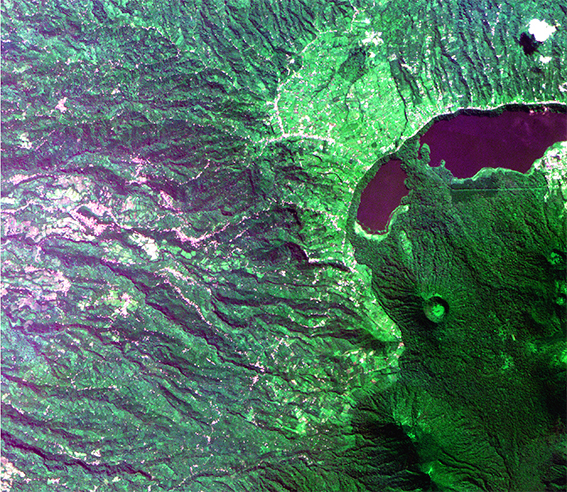
A satellite image of the Alas Mertajati in Central Bali. Image source Planet Labs, Superdove, May 30, 2022.