Alas Mertajati
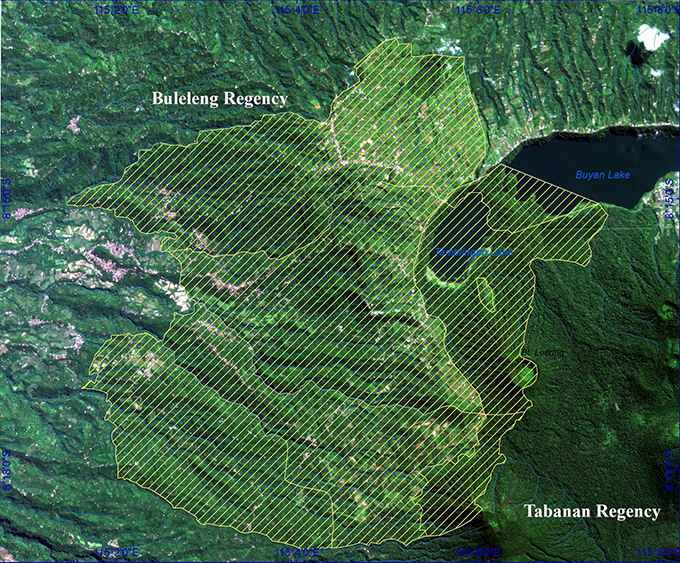
The Mertajati Forest, the Alas Mertajati, is located in the highlands of Central Bali adjacent to Lake Tamblingan. The area is home to Casuarina and ancient banyan trees and serves as a vital source of fresh water. The water from Mertajati holds a privileged position among the Indigenous people of Dalem Tamblingan Catur Desa, who have inhabited the region for centuries.
The subak irrigation system, first documented in the 9th century, is an egalitarian water management concept employed by local farmers to manage limited water resources. It involves a network of canals and terraces carved into the hillsides, allowing for the careful and equitable distribution of water during the dry season. The subak system was at the core of sustainable resource care long before the term became fashionable. The subak method integrates the Balinese Tri Hita Karana philosophy—the three sources of well-being—into multi-generational land stewardship practices, setting Balinese terrace management apart from similar practices in East Asia. In recognition of its cultural and environmental value, the subak water management system was declared a UNESCO World Heritage Site in 2012, making it not only a source of pride for the Balinese but also a premier tourist attraction.
Alas Mertajati. Protected forest adjacent to Lake Tamblingan. Video by RTS.
The Alas Mertajati is a significant resource both as forested lands and as a water catchment system. Situated in the highlands, the Alas Mertajati spans the hillsides of ancient volcanoes, ranging in elevation from 300 to 2000 meters above sea level. Tropical rains fill the groundwater and streams that flow from the forests into agricultural plots at lower elevations. Temperatures in the Mertajati highlands are notably lower, creating a unique microclimate that supports year-round harvests of a diverse collection of fruits, flowers, vegetables, and other plants. The local soils, known as andosols, are dark, mineral-rich, and highly porous as a result of their volcanic origin. Coupled with a consistent supply of leaf litter from the perpetually lush vegetation, these nutrient-rich soils provide excellent conditions for plant cultivation and food production.
However, the celebrated subak system is facing multiple challenges. There is a waning interest among young Balinese in the physically demanding tasks involved in subak maintenance. Moreover, the conversion of irrigated lands into water-intensive tourist resorts and a general decrease in water availability have further strained the subak network. Nevertheless, the subak-supported rice terraces have become deeply ingrained in the expectations of visitors. Some hotels go to the extent of paying subak farmers not to cultivate rice for consumption, but to preserve the terraces adjacent to their establishments for environmental nostalgia and a façade of sustainability, like a 21st-century version of the Potemkin village.